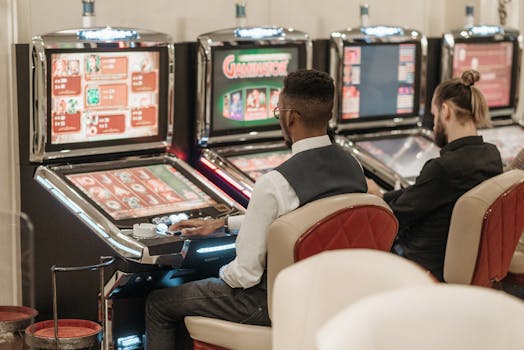
Gambling, a pastime often associated with luck and risk, has surprisingly played a pivotal role in the development of probability theory. This mathematical field, essential for quantifying the likelihood of events, owes much of its foundation to the analysis of games of chance. The historical interplay between gambling and mathematics reveals how leisure activities can spur significant scientific and intellectual advancements.
Beginnings in Renaissance Europe
The journey of probability theory began in the Renaissance period when gambling was a popular activity among the European nobility. Initially, the outcomes of dice games and other forms of gambling were considered purely a matter of fortune, with no scientific or mathematical underpinnings. However, this perception started to shift due to the intellectual curiosity of some players who noticed patterns and predictability in these games.
.png)
Gerolamo Cardano: A Pioneer
One of the earliest figures to influence the development of probability theory was Gerolamo Cardano, an Italian mathematician and avid gambler. Around 1564, he wrote "Liber de Ludo Aleae" (The Book on Games of Chance), where he laid down the foundational principles of probability. Cardano’s work was pioneering as it systematically analyzed the outcomes of dice games using combinations and permutations.
The Pascal-Fermat Correspondence
The significant advancement in probability theory, however, emerged from the correspondence between Blaise Pascal and Pierre de Fermat in the 17th century. Their discussion was initiated by a query from a gambler, Chevalier de Méré, who was puzzled by a problem in dividing stakes in an unfinished game of chance. This led Pascal and Fermat to formulate the concepts of expected value and mathematical expectation.
This exchange between Pascal and Fermat is often viewed as the birth of modern probability theory. They developed methods to calculate the probability of various outcomes in gambling scenarios, not just solving practical gambling dilemmas but also setting the stage for future mathematical explorations.
Expansion and Application
As probability theory evolved through the 18th and 19th centuries, it grew more sophisticated and found applications beyond gambling. It became integral to emerging fields such as insurance and finance and later permeated diverse scientific disciplines, including sociology and meteorology.
Modern Implications
Today, probability theory is indispensable across various sectors. It is employed in economic models, weather prediction, health informatics, and more. Modern technologies like search engines and data analysis algorithms also rely heavily on probabilistic models, showcasing the enduring legacy of gambling on this branch of mathematics.
Conclusion
The influence of gambling on the development of probability theory highlights an intriguing aspect of human knowledge: practical challenges can often drive theoretical breakthroughs. Gambling, while typically seen as a form of entertainment, has contributed profoundly to our understanding of probability, demonstrating how leisure can intersect with and propel scientific inquiry. This historical synergy continues to impact numerous fields, proving that the roots of scientific advancement can often be found in unexpected places.