Title: The Intricate Relationship Between Gambling, Science, and Mathematics
Gambling, often perceived as a mere form of entertainment or a risky vice, is intricately linked to the disciplines of science and mathematics. Delving into this intersection not only enriches our understanding of gambling as more than just a game of luck but also highlights its governance by statistical theory and precise calculations.
Mathematics: The Backbone of Gambling
.png)
Mathematics plays a pivotal role in the structure of gambling, particularly through probability and statistics. Every game of chance, whether it involves cards, dice, or roulette wheels, relies on these mathematical principles. For example, the odds of rolling a specific number with a dice are 1 in 6, reflecting the dice's six faces. Such probability calculations are essential for both players aiming to strategize their next move and casinos managing the odds.
Scientific Insights into Gambling Behavior
The science of gambling encompasses psychology and neuroscience, focusing on understanding why people gamble despite obvious risks. This area of research investigates how the brain responds to wins and losses, and why the anticipation of reward can sometimes result in addictive behaviors. Insights gained from this research are crucial for developing responsible gambling practices and effective interventions for gambling addiction.
Game Theory and Strategic Gambling
Game theory, a sophisticated branch of mathematics, examines the strategic interactions within games where outcomes depend significantly on the actions of participants. Poker is a classic example where not only are the odds important, but the ability to predict and react to other players' actions is crucial. This melding of probability, psychology, and strategic interaction elevates poker beyond simple gambling to a complex intellectual challenge.
Technology's Role in Modern Gambling
Advancements in computer simulations and software development have significantly influenced gambling practices. These tools enable players and casinos to simulate complex game scenarios, improving understanding and strategy formulation. For instance, blackjack enthusiasts utilize software to hone skills like card counting, potentially gaining an advantage over the house.
Ensuring Fairness and Integrity
Beyond player strategy, mathematics and science are vital in maintaining fairness in gambling. Casinos employ experts in these fields to design games that yield predictable long-term results, fostering trust among patrons. These professionals utilize statistical methods to ensure the randomness of game outcomes and to verify that the house advantage is maintained transparently.
Economic and Business Implications
The gambling industry, a significant economic entity, relies heavily on mathematical models to optimize profits and manage risks. The calculation of bets, payouts, and odds involves complex mathematical analysis to balance profitability with the fairness of the games offered.
Educating and Empowering Players
An understanding of the mathematical and scientific underpinnings of gambling can empower players to make more informed decisions. Knowledge of how games function and the true nature of the odds involved can help demystify gambling and potentially reduce the risk of developing compulsive gambling behaviors.
Conclusion: A Confluence of Disciplines
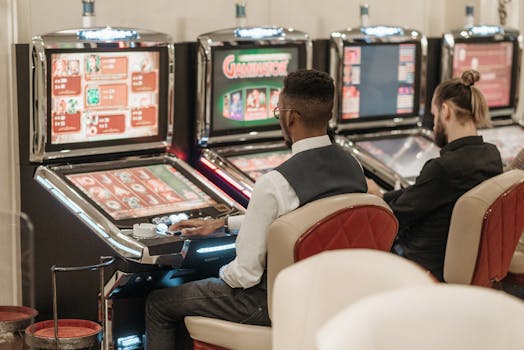
The convergence of gambling with science and mathematics offers profound insights not only into the mechanics of gambling but also into human psychology and decision-making processes. Whether through the strategic depths of a poker game, the probabilistic tactics in blackjack, or the psychological understanding derived from slot machine outcomes, the amalgamation of these disciplines sheds light on the multifaceted nature of gambling. As research in these areas progresses, it promises to reveal even more about the complexities of gambling and its broader implications for society.