Roulette has captured the imagination of casino enthusiasts for centuries, offering a blend of suspense, strategy, and the alluring hope of a big win. While it’s well known that no strategy can eliminate the house edge, there are proven ways to enhance your chances of making profits, manage your bankroll more efficiently, and enjoy the game responsibly. In this article, we will delve into the best strategies for winning at roulette, focusing on mathematical reasoning, bet selection, and disciplined play. Whether you’re a casual player or an aspiring strategist, these insights will help you play smarter and potentially walk away from the wheel with more than just a thrill.
Understanding the Roulette Wheel: Odds and House Edge
Before exploring strategies, it’s crucial to understand the structure of the roulette wheel. There are two main types of roulette: European (single zero) and American (double zero). The European wheel has 37 pockets (numbers 1-36 and a single 0), while the American wheel has 38 pockets (including both 0 and 00).
The house edge is directly linked to these zeros:
- European roulette: House edge of 2.7% - American roulette: House edge of 5.26%This difference might seem small, but over hundreds of spins, it becomes significant. For instance, if you wager $100 per spin for 100 spins, you can expect to lose about $270 on a European wheel, compared to $526 on an American wheel, purely due to the house edge. Therefore, always opt for European roulette when possible to maximize your chances.
.png)
Bet Selection: Outside vs. Inside Bets
Roulette offers a variety of bets, each with different odds and payouts. Understanding the distinction between outside and inside bets is essential for building a strategy.
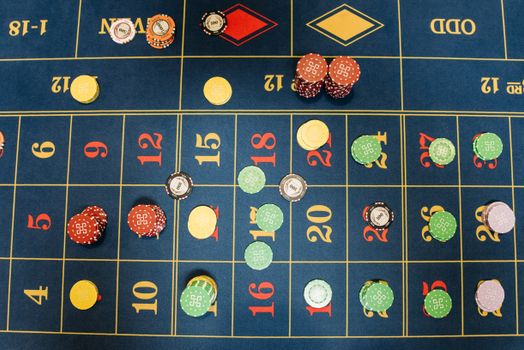
- Outside Bets: These include Red/Black, Even/Odd, High/Low, Dozens, and Columns. They cover a broader range of numbers, offering a nearly 50% chance of winning (except for the zeros), but with lower payouts (1:1 or 2:1). - Inside Bets: These are placed on specific numbers or small groups (straight up, split, street, corner, etc.). They have higher payouts (up to 35:1 for a single number), but the odds of winning are much slimmer.Here’s a comparative table to summarize the main differences:
| Bet Type | Numbers Covered | Odds of Winning (European) | Payout |
|---|---|---|---|
| Red/Black | 18 | 48.6% | 1:1 |
| Even/Odd | 18 | 48.6% | 1:1 |
| High/Low | 18 | 48.6% | 1:1 |
| Dozens | 12 | 32.4% | 2:1 |
| Straight Up (Single Number) | 1 | 2.7% | 35:1 |
For players aiming for consistent wins, focusing on outside bets is statistically safer, while inside bets cater to those chasing bigger, but rarer, payouts.
Money Management: Setting Limits and Sticking to Them
One of the most overlooked strategies in roulette is effective bankroll management. Even with the best mathematical strategy, it’s easy to lose control and chase losses, leading to poor outcomes. Here’s how you can use money management to your advantage:
1. Set a budget before you start playing and stick to it. 2. Decide in advance the maximum amount you’re willing to lose and the profit at which you’ll walk away. 3. Use smaller bets relative to your bankroll. For example, with a $500 bankroll, limit each bet to $10 or less. 4. Take breaks to avoid getting caught up in emotional swings.Research shows that players who set limits and take breaks are 70% less likely to exceed their planned budget compared to those who do not. This discipline is often what separates long-term winners from impulsive losers.
Advanced Strategies: Martingale, Labouchere, and the D’Alembert
Several betting systems have been developed to help players manage bets and potentially overcome the house edge in the short term. Let’s examine the most popular ones, their mechanics, and their risks.
1. Martingale System This classic strategy involves doubling your bet after every loss, aiming to recover losses with a single win. For example, if you bet $10 and lose, your next bet is $20; lose again, and you bet $40, etc. Pros: - Simple and easy to apply - Can recover losses quickly after a win Cons: - Requires a large bankroll to withstand losing streaks - Table limits can cap your bets, resulting in unrecoverable losses 2. Labouchere System Also known as the "cancellation system," it involves writing down a sequence of numbers (e.g., 1, 2, 3, 4). Your bet is the sum of the first and last numbers. If you win, cross them out; if you lose, add the lost amount to the end of the sequence. Pros: - Customizable to your risk tolerance - Can provide small, consistent wins Cons: - Complex to track - Like Martingale, can lead to high bets during losing streaks 3. D’Alembert System This moderate system increases your bet by one unit after a loss and decreases it by one after a win. Pros: - Less risky than Martingale - Slower progression of bet sizes Cons: - Can still result in significant losses during a long losing streak - Does not overcome house edgeIn all these systems, the key is understanding that they do not change the odds of the game—they simply manage bet sizes for streaks. Use them with caution and always stay within your limits.
Exploiting European Roulette Variants: En Prison and La Partage Rules
If you’re playing European roulette, look for tables that offer the "En Prison" or "La Partage" rules—these can substantially improve your odds on even-money bets (Red/Black, Even/Odd, High/Low):
- En Prison: If the ball lands on zero, your even-money bet is "imprisoned" for the next spin. If your bet wins on the next spin, you get your stake back; if not, you lose it. - La Partage: If the ball lands on zero, you lose only half your even-money bet, and the other half is returned.These rules reduce the house edge on even-money bets from 2.7% to 1.35%. For long-term players, this can make a significant difference. For example, over 1,000 bets of $10, you’d lose about $135 with these rules, versus $270 without them.
Psychological Strategies: Staying Rational at the Table
Roulette’s rapid pace and swings can quickly trigger emotional responses. To maintain a strategic edge, you must keep your cool and avoid common psychological traps:
- Gambler’s Fallacy: Believing that a number is "due" because it hasn’t appeared in a while is a classic error. Each spin is independent—previous results do not affect future outcomes. - Chasing Losses: Trying to recover losses by increasing bet sizes often leads to bigger losses. - Overconfidence: After a few wins, it’s easy to get carried away and make reckless bets. Stick to your system and limits.Studies by the Responsible Gambling Council have found that players who use self-imposed limits and avoid emotional betting are more likely to enjoy positive experiences and minimize losses.
Final Thoughts: Playing Smart to Maximize Your Roulette Experience
Roulette remains a game of chance, but by understanding the odds, choosing the right bets, managing your money wisely, and staying disciplined, you can significantly boost your chances of walking away a winner. Always prefer European roulette with favorable rules, focus on outside bets for more consistent results, and remember that no system can guarantee a win in the long run. Ultimately, the best strategy is to play for entertainment, set realistic goals, and know when to walk away—so the wheel stays as exciting as ever.