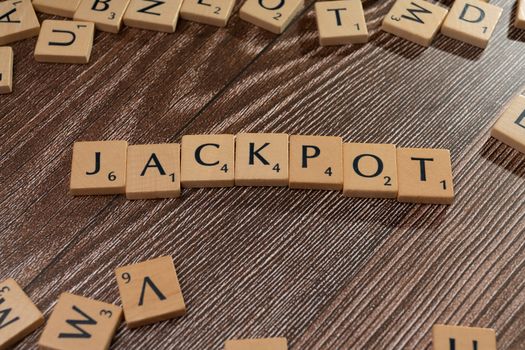
Betting on Life: Insurance as a Form of Historic Gambling
Life is full of uncertainties, and humans have long sought ways to manage risk and fate. While gambling is often associated with casinos and games of chance, a curious parallel exists in the world of insurance—a financial instrument that, at its core, hinges on probabilities, chance, and outcomes we cannot fully control. Throughout history, the mechanisms underlying insurance and gambling have intertwined in surprising ways. Betting on your own life or assets may sound like the stuff of high-stakes poker, but in reality, insurance has deep roots in the culture of wagering. In this article, we’ll explore how insurance evolved as a form of historic gambling, the math and psychology that connect them, and how society’s perspective continues to shift.
The Origins of Insurance: Wagers on the Unpredictable
The concept of insurance dates back thousands of years, tracing its origins to ancient civilizations that faced unpredictable perils. In Babylon around 1750 BCE, the Code of Hammurabi included clauses that protected merchants against shipping losses. These early arrangements were rudimentary—if a cargo ship was lost at sea, a group of merchants would pool resources to help the unlucky party recover. This collective approach mirrored the logic of a wager: many stake a small amount, a few receive a large payout if chance goes against them.
In 17th-century England, the connection between gambling and insurance became explicit. London’s Lloyd’s Coffee House, the precursor to Lloyd’s of London, was a bustling hub where shipowners, merchants, and gamblers would bet on whether ships would return safely. Wagers on shipwrecks, piracy, and storms were common. Eventually, these informal bets were formalized into insurance contracts, transforming a speculative gamble into a regulated financial product.
.png)
Notably, the first life insurance policies in the 18th century were outright wagers on a person’s lifespan. In many cases, third parties would “bet” on when a notable individual would die—if the person died before the policy’s end date, the bettor collected a payout. This practice, known as the tontine, was controversial and eventually regulated due to its moral and ethical implications.
Shared Foundations: Probability, Risk, and the Pooling of Fate
At their core, both insurance and gambling rest on the mathematics of probability. In both activities, participants bet on uncertain outcomes—whether it’s the spin of a roulette wheel or the likelihood of a house fire. The difference lies in purpose and social framing.
Insurance pools risk among many individuals. Each policyholder pays a relatively small premium to insure against a potentially devastating loss. If the statistically unlikely event occurs—such as a car accident, illness, or untimely death—the insurer pays out a large sum. The system relies on the law of large numbers: though individual events are random, the aggregate outcomes become predictable over a large group.
Gambling, by contrast, is typically a voluntary wager on an outcome with an uncertain probability, often for entertainment or profit. Both activities require careful calculation of odds. In fact, the first actuaries—mathematicians who calculate risk for insurance companies—borrowed heavily from the mathematics developed by gamblers and probability theorists such as Blaise Pascal and Pierre de Fermat.
Here’s a side-by-side comparison:
| Aspect | Insurance | Gambling |
|---|---|---|
| Primary Purpose | Risk protection, financial security | Entertainment, profit |
| Participants | Many policyholders pool risk | Individual or group bettors |
| Outcome | Compensates loss if event occurs | Winners collect, losers forfeit stake |
| Role of Probability | Essential for premium calculation | Determines odds & payouts |
| Regulation | Strictly regulated, consumer-focused | Regulated, but focus on fairness |
This table highlights that, while the mechanics are similar, the ultimate goal and ethical framing of insurance set it apart from pure gambling.
Historic Examples: When Insurance Crossed the Line into Gambling
Throughout history, society has repeatedly confronted the blurry line between legitimate insurance and speculative gambling. One of the most controversial forms was the “dead pool” or “wager policy.” In 18th-century England, it became common for people to take out life insurance policies on celebrities, politicians, or even strangers, hoping to profit from their untimely demise.
This practice led to several public scandals. In 1777, the British Parliament passed the Life Assurance Act, also called the “Gambling Act,” to curb these abuses. The law required that policyholders have an “insurable interest” in the person insured—for example, a spouse or business partner—rather than simply placing a bet on a stranger’s life.
Another example is the tontine, a popular investment and pseudo-insurance vehicle in the 18th and 19th centuries. In a tontine, participants pooled money, and as members died, their shares were redistributed to the survivors. The last living member received the entire remaining fund—a morbid but effective incentive to “outlive the competition.” Tontines were eventually banned or heavily regulated in many countries due to their resemblance to gambling and the potential for fraud and foul play.
Even today, the line can blur. In 2010, the U.S. insurance industry paid out nearly $1.5 trillion in claims, but some “stranger-originated life insurance” (STOLI) schemes still occasionally surface, where investors take out life insurance policies on unrelated individuals as an investment vehicle, prompting ongoing regulatory scrutiny.
Psychology and Social Perspectives: Why We Bet on Ourselves
Why do people buy insurance, knowing that in most cases, they will never “win” a payout? And why does society view insurance as prudent but gambling as risky or even immoral?
The answer lies in both psychology and culture. Insurance appeals to the human desire for security and the mitigation of catastrophic loss. People are generally risk-averse—they’d rather pay a small, certain cost (the premium) to avoid a large, uncertain loss. This is backed by behavioral economics: studies show that individuals overestimate the likelihood of rare but catastrophic events, making them more willing to insure against them.
Gambling, in contrast, plays to risk-seeking behavior—the thrill of the uncertain, the hope of a windfall. According to the American Gaming Association, Americans legally wagered a record $93.2 billion on sports betting in 2022, showing how the lure of chance remains powerful.
Social framing also plays a crucial role. Insurance is seen as responsible and socially beneficial—it pools risk and provides a safety net. Gambling, while increasingly mainstream, is still often viewed as a vice or moral hazard, especially when it leads to addiction or financial ruin.
Modern Innovations: Insurtech and the Gamification of Risk
The digital age has brought a new twist to the historic relationship between gambling and insurance. Emerging technologies are blurring the lines further, both in how insurance is sold and how people interact with risk.
Peer-to-peer (P2P) insurance platforms, like Lemonade and Friendsurance, use social networking models where groups of users pool premiums and share in the unused funds if claims are low—essentially modern tontines with regulatory safeguards. By 2023, Lemonade had over 1.9 million customers and processed nearly $500 million in gross written premiums.
Gamification is also entering the insurance sphere. Some insurers offer rewards, discounts, or “risk games” based on healthy behaviors (such as steps taken or driving habits), turning risk management into a form of game-like competition. This approach not only incentivizes positive behavior but also taps into the psychology that makes gambling compelling.
Meanwhile, new forms of betting on life and outcomes—such as prediction markets—continue to skirt the edge of insurance and gambling. These platforms allow users to wager on everything from elections to economic indicators, sometimes providing valuable data for insurers and policymakers.
Final Reflections: The Enduring Bond Between Insurance and Gambling
From Babylonian merchants to digital insurtech startups, the act of betting on life’s uncertainties has shaped finance, culture, and society itself. While insurance is now a cornerstone of responsible financial planning, its historic roots in gambling remind us that the urge to wager—on ourselves, our fortunes, or our very lives—is deeply human.
As technology evolves and new models emerge, the boundary between insurance and gambling remains a source of ethical debate and regulatory challenge. But one thing is clear: both practices are fundamentally about confronting fate, managing risk, and seeking a measure of control in an unpredictable world.