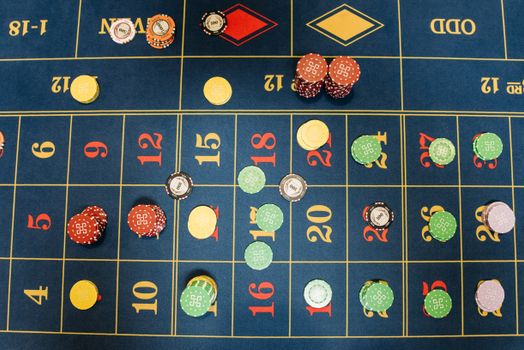
Gambling has long been a source of fascination, entertainment, and controversy. The dice, the card table, and the spinning wheel are not just icons of chance—they are flashpoints for complex ethical debates that have evolved across cultures and centuries. As societies have changed, so too have their judgments about gambling’s morality, its risks, and its place within the social order. Exploring the ethical debates around gambling from a historical perspective reveals how attitudes have shifted—and why the issue remains a lively topic for discussion today.
The Ancient World: Gambling and Moral Ambiguity
Historical records show that gambling is as old as civilization itself. In ancient China, archaeologists have found tiles used in rudimentary games of chance dating back to 2300 BCE. The Greeks and Romans also indulged in dice games and sports betting. Yet, even in these early societies, gambling aroused moral concerns.
For instance, Plato criticized gambling as a distraction from responsible citizenship, associating it with vice and weakness. Meanwhile, Roman law wavered between outright bans and regulated exceptions, especially during festivals. Gambling, in these contexts, was not just a pastime—it was a test of character. The ancient philosopher Seneca warned that games of chance “destroy the soul of the player” by encouraging superstition and greed.
.png)
Still, it is important to note that these societies rarely saw gambling as inherently evil. Rather, the ethical debate focused on moderation, intent, and social context. Gambling during Saturnalia, a Roman festival, was tolerated—even celebrated—while persistent, private wagering could be frowned upon or penalized.
The Medieval Era: Sin, Salvation, and Social Order
With the rise of Christianity in Europe, gambling’s ethical standing became entwined with religious doctrine. Medieval theologians such as St. Thomas Aquinas debated whether games of chance were sinful in themselves, or whether sin depended on intent and excess. The prevailing view by the 13th century was that gambling could be sinful if it led to cheating, neglect of duty, or the ruin of oneself or others.
The Church’s stance influenced secular law. Many medieval European kingdoms criminalized gambling or imposed restrictions, especially among the lower classes. Aristocrats, however, often enjoyed more leniency, as gambling was part of courtly culture. The “double standard” reflected deeper questions: Was gambling a corrupting vice or an innocent diversion? Did its sinfulness depend on who gambled, and how?
In Islamic societies, the Qur’an was explicit: “Intoxicants and games of chance… are abominations of Satan’s handiwork” (Qur’an 5:90). This strict prohibition, still reflected in many Muslim-majority countries today, highlights another enduring thread in the ethical debate: the idea that gambling undermines social and spiritual well-being.
Early Modern Shifts: Commerce, Risk, and Moral Anxiety
The Renaissance and Enlightenment periods saw major changes in attitudes toward gambling. As trade and capitalism expanded, so did public lotteries, card games, and betting on everything from sports to stock prices. In 17th-century England, the government operated state lotteries to fund public works. By the 18th century, gambling was widespread across Europe and its colonies, and new ethical questions emerged.
One major debate centered on the growing similarity between gambling and the emerging financial markets. Was investing in stocks a form of prudent speculation, or just another gamble? Daniel Defoe, the author of “Robinson Crusoe,” condemned the South Sea Bubble of 1720 as a “lottery of life and fortune.”
Enlightenment thinkers tended to distinguish between games of skill (like chess) and pure games of chance (like dice). The latter were often seen as morally suspect, as they left outcomes entirely to luck, not merit. Voltaire, a critic of state lotteries, argued that governments promoting gambling exploited the poor and desperate.
Yet, others saw some value in gambling. By providing “controlled risk,” games of chance could foster moderation, discipline, and even social mobility—so long as they were properly regulated.
The 19th and 20th Centuries: Regulation, Rights, and Social Impact
The Industrial Revolution brought unprecedented urbanization and social change—and with it, fresh ethical anxieties about gambling. In Victorian England, gambling was linked to poverty, crime, and moral decay. Reformers campaigned against betting shops and lotteries, arguing that gambling preyed on the vulnerable.
In the United States, gambling was alternately banned and tolerated. By the late 19th century, most states had outlawed lotteries and casino gambling, citing rampant corruption and social harm. Yet, by the 1930s, public opinion shifted again, with Nevada legalizing casinos in 1931 as a means of economic recovery.
The 20th century saw the emergence of new ethical debates: Was gambling a matter of personal freedom or a threat to public health? Could state-run lotteries or casinos be justified if their revenues funded education or other social goods? These questions gave rise to a patchwork of regulations, reflecting the ongoing tension between individual rights and collective welfare.
Contemporary Perspectives: Ethics in a Globalized Gambling Industry
Today, gambling is a multi-billion-dollar global industry. The ethical debates have only grown more complex, intersecting with issues of technology, addiction, and social responsibility. According to the World Gambling Report, global gambling revenues surpassed $465 billion in 2022, with over 1.6 billion people participating in some form of gambling each year.
A major contemporary issue is the rise of online gambling, which brings unprecedented access—and new ethical concerns. Rates of problem gambling have risen in countries with liberalized online betting laws. For example, the UK Gambling Commission reported that 0.5% of adults had a gambling problem in 2022, but 3.8% of adults aged 16-24 were classified as “at-risk.”
Advocates argue that legal, regulated gambling can generate significant tax revenue—over $30 billion annually in the United States alone—while giving adults the freedom to choose their entertainment. Critics counter that aggressive marketing, especially toward young people and vulnerable groups, can fuel addiction and financial ruin. The ethical debate now extends to questions of corporate responsibility, government oversight, and the balance between profit and public health.
Comparing Historical and Modern Ethical Arguments
A comparative overview helps clarify how the ethical arguments around gambling have evolved over time:
| Era | Main Ethical Concern | Typical Regulation | Key Example |
|---|---|---|---|
| Ancient | Moderation, superstition | Festival exceptions, occasional bans | Roman Saturnalia gambling |
| Medieval | Sin, social order | Religious bans, class-based restrictions | Church laws, Islamic prohibition |
| Early Modern | Exploitation, social mobility | State lotteries, moral debates | 17th-century English lotteries |
| 19th-20th Century | Crime, public health | Widespread bans, limited legalization | Nevada legalizes casinos (1931) |
| Contemporary | Addiction, corporate responsibility | Regulation, harm reduction, online controls | UK Gambling Act 2005 |
This table shows that, while the language and specifics have changed, the central ethical questions remain: Who is harmed by gambling, who benefits, and where should society draw the line?
Why the Historical Debate Still Matters Today
Understanding the ethical debates around gambling from a historical perspective provides valuable context for today’s policy discussions. The arguments—about vice and virtue, liberty and responsibility—are not new. Societies have always wrestled with how to balance the pleasures and dangers of games of chance.
For example, the ongoing controversy over sports betting in the United States echoes 19th-century fears about gambling’s “corrupting influence.” Meanwhile, debates over online gambling and loot boxes in video games reflect ancient concerns about superstition and manipulation. Recognizing these patterns can help policymakers, industry leaders, and citizens make more informed, ethical decisions about the future of gambling.