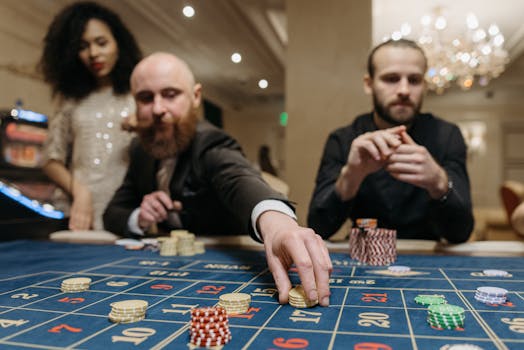
The Role of Probability Theory in Gambling: Unveiling the Mathematics Behind the Games
Gambling has fascinated humanity for centuries, from ancient dice games to the glittering casinos of Las Vegas and the vast world of online betting. While luck often appears to be the deciding factor, there is an underlying structure guiding every roll of the dice, spin of the wheel, or deal of the cards: probability theory. This branch of mathematics is at the heart of all gambling activities, determining outcomes, shaping game designs, and influencing player strategies. In this article, we’ll explore the essential role probability theory plays in gambling, how it impacts both players and the house, and why understanding these concepts can enhance your appreciation of games of chance.
Understanding Probability Theory: The Foundation of Gambling
Probability theory is a mathematical framework for quantifying uncertainty. It provides the tools to calculate the likelihood of various outcomes in random events—precisely what happens in every gambling game. At its core, probability is expressed as a number between 0 (an impossible event) and 1 (a certain event). For example, the probability of flipping a fair coin and getting heads is 0.5, or 50%.
In gambling, these calculations become more complex but follow the same principles. Whether you’re rolling two dice, drawing cards from a deck, or spinning a roulette wheel, each possible outcome has a calculable probability. The basic formula is:
.png)
Probability = (Number of favorable outcomes) / (Total number of possible outcomes)
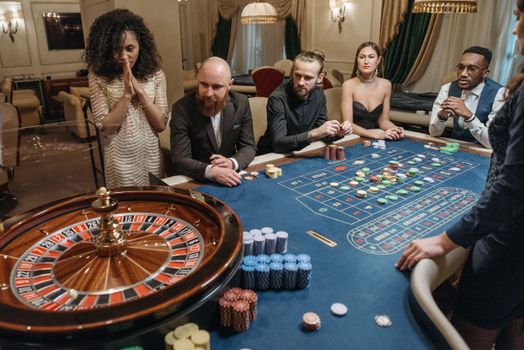
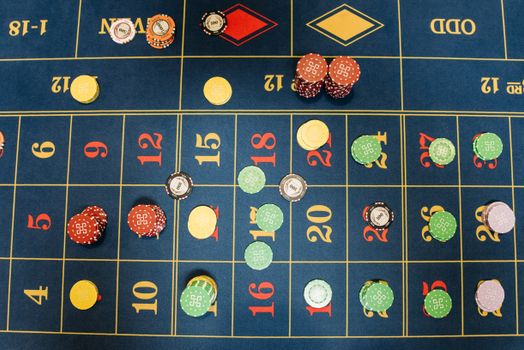
For example, in European roulette, there are 37 numbered slots (1-36 and a single zero). The probability of the ball landing on any specific number is 1/37, or about 2.7%. This mathematical structure allows both players and casinos to predict the long-term behavior of games.
House Edge: The Casino’s Mathematical Advantage
One of the most important applications of probability theory in gambling is determining the “house edge.” This term refers to the average percentage of each bet that the casino expects to retain over the long run. It’s a direct result of the probabilities built into the rules of each game.
For instance, in American roulette, the presence of both a 0 and 00 increases the total number of slots to 38. Betting on a single number pays 35 to 1, but the true odds of winning are 1 in 38. This discrepancy gives the house an edge of about 5.26%. Over thousands of spins, this small percentage translates into significant profits for the casino.
Different games have different house edges, determined entirely by their probability structures. Here’s a comparative overview:
| Game | House Edge (%) | Example Probability |
|---|---|---|
| Blackjack (basic strategy) | 0.5 | Chance of busting after drawing a 10 on 15: ~58% |
| European Roulette | 2.7 | Probability of single number hit: 2.7% |
| American Roulette | 5.26 | Probability of single number hit: 2.63% |
| Slot Machines | 2–15 | Varies by machine and paytable |
| Craps (pass line bet) | 1.41 | Chance of rolling 7 before 2: ~83.3% |
As the table shows, even games that seem purely random are carefully designed using probability calculations to ensure the house maintains an advantage.
Expected Value: Calculating the True Cost or Benefit
Another key concept derived from probability theory is “expected value” (EV). Expected value is the average outcome of a bet if it were repeated many times. It is calculated by multiplying each possible outcome by its probability and summing the results.
For example, suppose you bet $1 on a single number in European roulette. If you win, you receive $35 plus your $1 bet back; if you lose, you lose your $1. The expected value is:
EV = (Probability of win × Win amount) + (Probability of loss × Loss amount) EV = (1/37 × $36) + (36/37 × -$1) = $0.97 - $0.97 = -$0.027
On average, you lose about 2.7 cents each time you make this bet—a direct reflection of the house edge. Understanding expected value helps players make informed decisions, avoid bets with poor returns, and recognize that, in the long run, most gambling games favor the house.
Probability Theory in Player Strategies
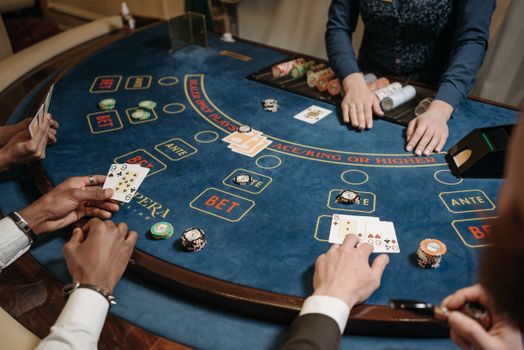
While the odds are always in the house’s favor over time, probability theory also empowers players to make smarter choices and maximize their chances of winning in the short term. Many popular strategies in games like blackjack and poker are grounded in mathematical principles.
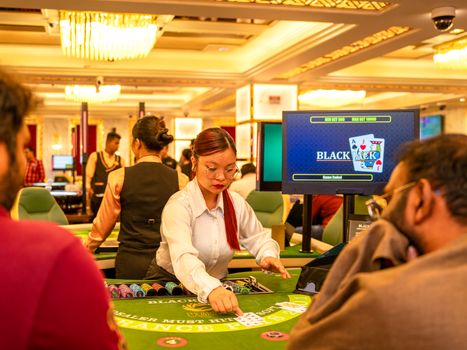
In blackjack, for instance, “basic strategy” charts tell players the statistically optimal action for every possible combination of player hand and dealer upcard. These charts are built on millions of simulated hands and probability calculations. By following them, players can reduce the house edge to as low as 0.5%.
Poker is another game where probability plays a crucial role. Skilled players use concepts like pot odds (the ratio of the current size of the pot to the cost of a contemplated call) and expected value to decide whether to call, fold, or raise. For instance, if you have a flush draw after the flop in Texas Hold’em, your chance of hitting the flush by the river is about 35%. Knowing this probability allows you to compare it to the pot odds and make mathematically sound decisions.
Even in lottery and scratch-off games, understanding probability can help players see just how slim their chances of winning are. For example, the odds of winning the Powerball jackpot are about 1 in 292 million. This low probability is why lottery games are called a “tax on people who are bad at math.”
Probability, Randomness, and the Psychology of Gambling
Probability theory also explains many psychological phenomena in gambling. Humans are notoriously bad at intuitively understanding randomness, often falling for the “gambler’s fallacy”—the belief that past events influence future outcomes in independent events. For example, after a roulette wheel lands on red five times in a row, many believe black is “due” next time. In reality, each spin is independent, and the probability of red or black remains unchanged.
Casinos and game designers capitalize on these psychological biases, creating games that exploit our misunderstanding of randomness. Slot machines, for instance, use random number generators (RNGs) to ensure each spin is independent, but the near-miss effect (e.g., two jackpot symbols and a third just above the payline) can trick the brain into thinking a win is imminent, encouraging continued play.
Probability theory helps explain why these illusions are so effective and why, despite knowing the odds, many people continue to gamble. The combination of occasional wins and the unpredictability of outcomes creates a powerful reinforcement loop.
The Impact of Probability on Game Design and Regulation
Casinos and gambling regulators rely on probability calculations not just to ensure profitability, but also to guarantee fairness and transparency. Regulatory bodies require that all games meet specific mathematical standards to protect players from unfair practices.
For example, in the United Kingdom, the Gambling Commission mandates that slot machines display their Return to Player (RTP) percentage—a number derived from probability calculations. The RTP gives players an idea of how much of their wagered money they can expect to get back over time. A slot with a 96% RTP will, on average, return $96 for every $100 wagered (though actual results will vary widely in the short term).
Online casinos use certified random number generators and undergo regular audits to ensure the probabilities advertised in their games match the actual outcomes. These measures, rooted in probability theory, are crucial for maintaining trust in the gambling industry.
Final Thoughts: Why Probability Theory is Essential to Understanding Gambling
From the spin of a roulette wheel to the shuffle of a deck of cards, probability theory is the invisible engine driving every gambling game. It shapes the structure of casino games, determines the house edge, influences player strategies, and even underpins the regulations that protect consumers. While luck will always play a role in gambling, understanding the mathematics behind the games provides a clearer perspective on what to expect and why the odds almost always favor the house in the long run.
For those who wish to gamble responsibly, a basic grasp of probability can turn games of chance into opportunities for skillful play and informed decision-making. Whether you’re a casual player or a serious strategist, the principles of probability theory are your most valuable guide in the world of gambling.