The Intersection of Gambling, Science, and Mathematics: How Numbers Shape the Game
Gambling has fascinated humanity for millennia, from ancient dice games to sophisticated online casinos. Yet beneath the thrilling unpredictability and tales of fortune lies a deep connection to science and mathematics. The very essence of gambling is governed by numbers, probability, and statistical analysis. Understanding this intersection not only demystifies the world of gaming but also illuminates how scientific thinking shapes the odds, the games, and even the psychology of players.
This article explores how scientific principles and mathematical models underpin the gambling industry, drive game design, influence regulations, and empower both players and operators. From the laws of probability to the algorithms behind slot machines, let’s uncover how science and mathematics are inseparable from the world of gambling.
The Foundations: Probability Theory and the Birth of Modern Gambling
The roots of gambling and mathematics are intertwined. In the 17th century, gambling questions posed by French nobleman Chevalier de Méré led mathematicians Blaise Pascal and Pierre de Fermat to lay the groundwork for probability theory. They sought to answer questions like: What is the likelihood of rolling a six with two dice in 24 throws? Their correspondence not only solved these conundrums but also established the mathematical study of chance.
.png)
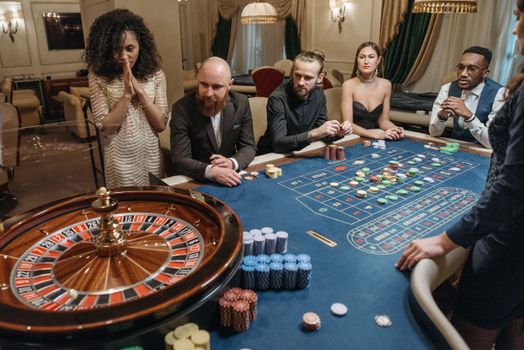
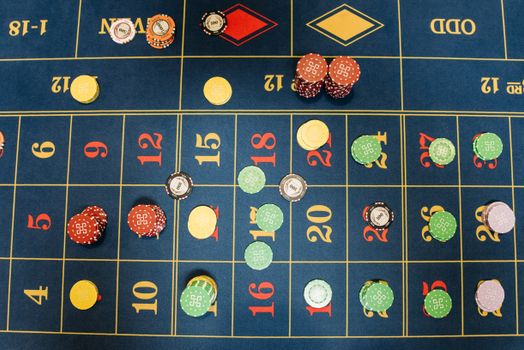
Probability theory remains central to all gambling activities. Every game — from roulette and blackjack to lotteries and sports betting — is built on quantifiable odds. For example, a standard European roulette wheel has 37 slots (1-36 plus a single zero). The probability of the ball landing on a specific number is thus 1 in 37, or about 2.7%. Casinos set payouts to ensure that, over time, the house retains a mathematical edge, known as the “house advantage” or “house edge.”
To illustrate, consider the following table showing the house edge for popular casino games:
| Game | House Edge (%) | Mathematical Principle |
|---|---|---|
| Roulette (European) | 2.7 | Probability & Expected Value |
| Blackjack | 0.5–2.0 (with basic strategy) | Probability, Card Counting |
| Slot Machines | 2.0–15.0 | Random Number Generation |
| Craps (Pass Line Bet) | 1.41 | Probability of Dice Outcomes |
| Baccarat (Banker Bet) | 1.06 | Statistical Distribution |
These percentages reflect how casinos rely on mathematical certainty, not luck, to ensure profitability over the long term.
Statistics: Analyzing Patterns and Predicting Outcomes
While probability sets the stage, statistics help analyze gambling outcomes and predict future trends. Casinos and regulatory bodies use statistical models to monitor fairness, detect fraud, and optimize game designs.
One classic application is in slot machine development. Modern slots are powered by random number generators (RNGs) that are tested using rigorous statistical techniques. For example, a slot with a “return to player” (RTP) rate of 96% means that, over millions of spins, the machine will pay out 96% of the money wagered. This figure is derived from statistical simulations and long-term tracking, ensuring the advertised RTP matches reality.
For sports betting, statisticians analyze vast datasets — player performance, weather conditions, historical matchups — to set odds that accurately reflect real-world probabilities. This has led to the rise of “sports analytics,” a field blending mathematics, data science, and behavioral insights. In the United States, the sports betting market generated over $93 billion in handle (total amount wagered) in 2022, much of which was shaped by statistical modeling.
Yet, statistics also empower individual players. Techniques like card counting in blackjack or “Kelly criterion” for bankroll management are rooted in mathematical optimization, helping skilled gamblers minimize risk and maximize potential returns.
The Science of Randomness: Ensuring Fair Play
Randomness is the lifeblood of fair gambling. Scientific methods are used to ensure that games are not rigged and outcomes are genuinely unpredictable.
In physical games, randomness comes from the shuffling of cards or rolling of dice. Casinos regularly replace cards and dice to prevent bias. For electronic games, computer-based RNGs are used. These algorithms are subjected to extensive testing, including the NIST Statistical Test Suite, which checks for patterns or predictability.
Regulatory agencies, such as the UK Gambling Commission, require online casinos to be certified by independent testing labs like eCOGRA or GLI. These labs use mathematical tests to verify that the RNGs produce results consistent with theoretical probabilities. For instance, in a deck of 52 cards, each card should appear about 1.92% of the time over a large sample size; any significant deviation can signal manipulation or malfunction.
The science of randomness also extends to lotteries. The Powerball lottery, for example, uses mechanical ball machines and undergoes strict audits to ensure each number combination has an equal chance of selection. In 2016, the odds of winning the Powerball jackpot were 1 in 292,201,338, a figure calculated using combinatorial mathematics.
Game Theory: Strategic Decision-Making and Human Behavior
Game theory, a branch of mathematics that studies strategic interactions, has transformed the understanding of gambling. It explores how players make decisions when outcomes depend on the choices of others — a crucial element in games like poker, where bluffing and psychological strategy are as important as the cards themselves.
In poker, game theory optimal (GTO) strategies use mathematical models to determine the best possible play in any situation, assuming opponents are equally rational. Professional players and online bots analyze millions of hands and use algorithms to refine their tactics. For example, the AI program Libratus defeated top human players in no-limit Texas Hold’em in 2017, demonstrating the power of mathematical modeling in complex gaming environments.
Game theory also helps explain phenomena such as “gambler’s fallacy” — the mistaken belief that past outcomes influence future ones in random events. For example, after a roulette wheel lands on red five times in a row, some players wrongly believe black is now more likely. In reality, each spin is independent, a concept rooted in probability and statistical independence.
The Psychology of Gambling: Where Science and Mathematics Meet the Mind
No discussion of gambling, science, and mathematics is complete without examining human psychology. Scientific research has revealed that the brain’s reward system is activated by both wins and near-misses, driving continued play. Slot machines, for instance, are carefully designed to maximize “intermittent reinforcement,” a principle identified by psychologist B.F. Skinner in the 1950s.
Mathematics is behind the scenes here, too. Slot machine designers use algorithms to control the frequency of wins, losses, and near-misses, creating the illusion of being “close” to victory. This triggers dopamine release, reinforcing the gambling habit even in the absence of financial rewards.
Moreover, cognitive biases like the illusion of control (believing one can influence random outcomes) and “hot hand fallacy” (believing a streak will continue) are well-documented in gambling studies. Understanding these psychological effects is crucial for developing responsible gambling tools and public policies, helping to protect vulnerable individuals from addiction.
The Role of Science and Mathematics in Responsible Gambling
With the global gambling market projected to reach $876 billion by 2026, according to Statista, responsible gambling has become a key concern. Science and mathematics play an essential role in this area, from designing self-exclusion tools to monitoring player behavior.
Mathematical models are used to detect problematic patterns, such as chasing losses or increasing bet sizes after a loss (a classic sign of “tilt” in poker). Online platforms employ machine learning algorithms to flag high-risk users, triggering interventions or account limits.
Public awareness campaigns often use statistics to educate players about the odds. For example, the UK’s “When the Fun Stops, Stop” campaign highlights the low probability of winning to encourage moderation.
Final Reflections: Science, Mathematics, and the Future of Gambling
The intersection of gambling, science, and mathematics is a rich and evolving landscape. From the earliest probability problems to today’s sophisticated algorithms and behavioral studies, numbers shape every aspect of the gambling world. Whether you’re a casual player or a casino operator, understanding the mathematical and scientific underpinnings of gambling can enhance enjoyment, inform strategy, and promote safer play.
As technology advances, the use of artificial intelligence, big data, and real-time analytics will further deepen the relationship between gambling, science, and mathematics. This ongoing integration not only advances the industry but also raises new ethical and social questions, ensuring that the study of this intersection remains as dynamic and unpredictable as the games themselves.