Casinos dazzle with flashing lights, spinning reels, and the allure of life-changing jackpots. But beneath the surface, the world of casino games is governed by the unyielding laws of mathematics. Every dice throw, card shuffle, and roulette spin is dictated by probability, shaping both the fortunes of players and the profits of the house. Understanding the role of mathematics—especially probability—in casino games not only demystifies the action but reveals why, in the long run, the house always wins.
The Foundations: Probability and Casino Design
Probability is the branch of mathematics that measures the likelihood of events occurring. In casino games, probability determines everything from your odds of drawing a blackjack to the chance of landing three cherries on a slot machine.
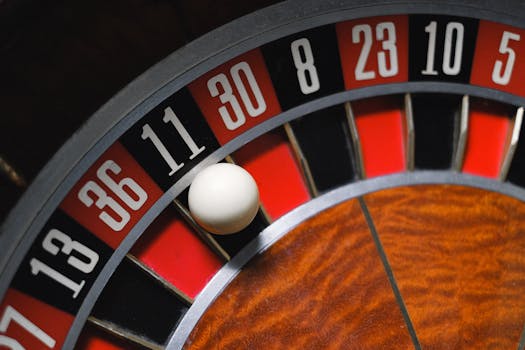
Casinos are meticulously designed around these probabilities to ensure profitability. For example, the concept of "house edge" is rooted in mathematical certainty. The house edge is the average percentage of each bet that the casino expects to keep over time. In roulette, the house edge on a single-zero (European) wheel is 2.7%, while on a double-zero (American) wheel it's 5.26%. This means that, mathematically, for every $100 wagered on American roulette, the house expects to keep $5.26.
.png)
Casino owners rely on massive numbers of bets to smooth out short-term fluctuations, ensuring that the mathematical edge holds over the long term. This statistical inevitability—known as the Law of Large Numbers—guarantees that while individual players may win big, the casino always profits in aggregate.
Card Games: The Mathematics of Blackjack and Poker
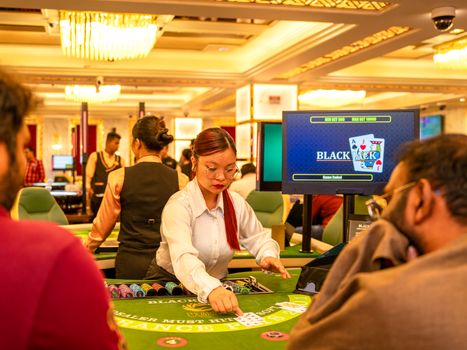
Card games like blackjack and poker are prime examples of how probability shapes both gameplay and strategy. In blackjack, the deck is finite and the odds are calculable. For example, the probability of being dealt a natural blackjack (an Ace and a 10-value card) in a single-deck game is about 4.83%. Skilled players use mathematical strategies like card counting to adjust their bets and play based on the changing composition of the deck.
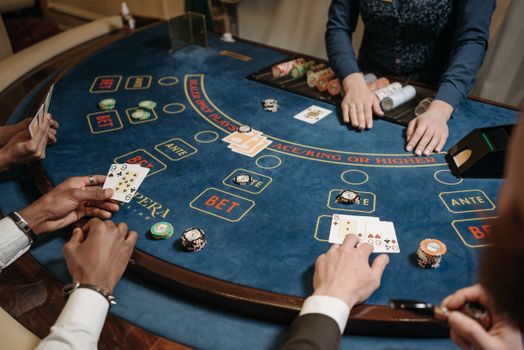
Poker, on the other hand, is a game of both skill and luck. Players calculate the odds of improving their hand versus the potential payout—known as "pot odds." For instance, in Texas Hold’em, if you have four cards to a flush after the flop, there are 9 cards left in the deck that can complete your flush out of 47 unknown cards. Your odds of hitting the flush on the next card are 9/47, or about 19.1%.
These probabilities are at the heart of poker strategy, guiding decisions on whether to call, raise, or fold. The most successful players are often those who best understand and apply the mathematics behind the game.
Randomness and the Illusion of Luck in Slot Machines
Slot machines epitomize the marriage of probability and perceived randomness. The outcome of every spin is determined by a Random Number Generator (RNG), a computer algorithm that produces unpredictable results based on complex mathematical formulas. Despite the apparent randomness, the odds are carefully calculated and programmed.
Payout percentages, or "return to player" (RTP), are set by the machine's software. For instance, a slot with a 96% RTP will, over the long run, return $96 for every $100 wagered. However, this is an average over millions of spins, not a guarantee for individual players.
Modern slots can have hundreds of paylines and symbols, making it impossible to calculate exact odds by hand. The probability of hitting a jackpot on a five-reel slot with 50 symbols per reel can be as low as 1 in 312,500,000. Casinos leverage these astronomical odds to offer massive jackpots while maintaining their mathematical edge.
Roulette, Craps, and the Mathematics of Chance
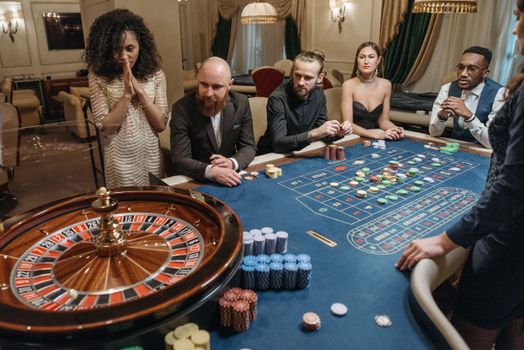
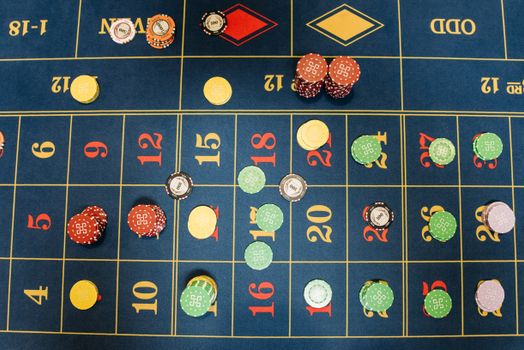
Table games like roulette and craps are governed by clear-cut probabilities that shape player strategies and house advantage. In roulette, each spin is independent, but the odds are fixed: betting on a single number in European roulette gives you a 1 in 37 chance (2.7%), while in American roulette, it's 1 in 38 (2.63%).
Craps, with its seemingly complex array of bets, is fundamentally a game of probability. The most common roll, a 7, can be made in 6 ways out of 36 possible dice combinations (16.7%), while the rarest numbers (2 and 12) only appear in one way each (2.78%). The house edge varies widely depending on the bet—pass line bets have a modest edge of 1.41%, while some proposition bets carry house edges over 10%.
The table below compares the house edge and probability of winning for several popular casino games:
| Game | House Edge (%) | Probability of Winning (Common Bet) |
|---|---|---|
| European Roulette | 2.7 | 48.6% (Red/Black bet) |
| American Roulette | 5.26 | 47.4% (Red/Black bet) |
| Blackjack | 0.5–2 | 42–49% (varies by strategy) |
| Craps (Pass Line) | 1.41 | 49.3% |
| Slot Machines (average) | 4–10 | Varies (RTP 85–98%) |
These numbers highlight how even seemingly favorable bets are statistically tilted in the house’s favor.
Long-Term Outcomes: The Law of Large Numbers and Gambler’s Fallacy
The Law of Large Numbers is a fundamental principle in probability: as the number of trials increases, the actual results will converge on the expected mathematical outcome. This is why casinos can confidently rely on the house edge. For example, over thousands of spins, the actual percentage of red or black outcomes in roulette will align closely with the predicted odds.
However, many gamblers fall prey to the "Gambler’s Fallacy"—the mistaken belief that past outcomes influence future events. For instance, after seeing black come up five times in a row on the roulette wheel, a player might believe that red is "due." In reality, each spin is independent; the probability remains the same regardless of past results.
This misunderstanding fuels much of the excitement—and the losses—in casino games. The mathematics of probability ensures that streaks and patterns are normal, but they offer no predictive power over future outcomes.
Game Design, Player Psychology, and Mathematical Edge
Casino games are not just mathematical constructs—they’re also carefully engineered experiences that leverage human psychology. Game designers use mathematical probability to shape both the payout structure and the emotional rollercoaster of wins and losses.
For instance, slot machines often use "near-miss" outcomes (where the symbols almost align for a big win) to keep players engaged, even though the probability of winning remains unchanged. Similarly, games often offer frequent small wins to give the illusion of success, all while the house edge quietly erodes the player’s bankroll.
Even the design of table games can influence player perception. Blackjack tables display payouts and odds prominently, but subtle rules—like the dealer hitting on soft 17—can shift the house edge by fractions of a percent, adding up dramatically over thousands of hands.
Why Understanding Probability Matters for Casino Players
For players, understanding the mathematics behind casino games is more than an academic exercise—it’s a key to informed decision-making. Knowing the true odds and house edge can help players set realistic expectations, avoid common pitfalls, and manage their bankrolls wisely.
For example, opting for games with a lower house edge, like blackjack with basic strategy, can extend playtime and reduce expected losses. Recognizing that every outcome is independent helps guard against emotional betting and the lure of "hot streaks" or "lucky numbers."
While no amount of skill can overcome the mathematical advantage of the house in the long run, savvy players who respect the numbers can enjoy casino games for the entertainment they are, rather than as a misguided path to riches.