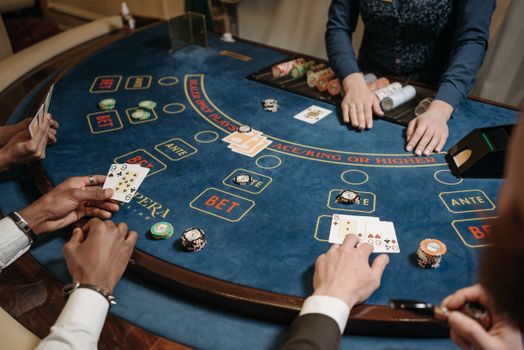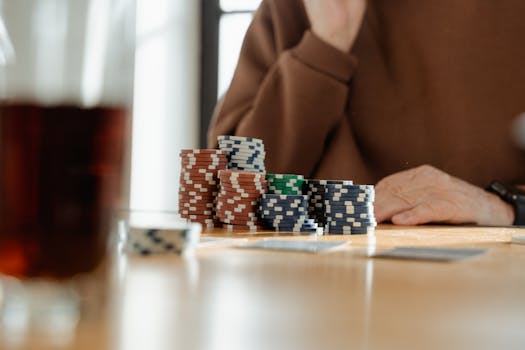
Poker is a game that has captivated millions across the globe. From smoky backrooms and glamorous casinos to online platforms with cutting-edge technology, poker is seemingly everywhere. But to see poker merely as a game of cards is to miss its deeper significance. Behind the chips, bluffs, and betting lies a fascinating blend of psychology, mathematics, culture, and personal growth. This is the art of poker—an intricate dance of skill, luck, and human nature that offers lessons far beyond the felt table.
Poker: A Global Phenomenon with Deep Roots
Poker’s journey from obscure origins to worldwide sensation is as colorful as the game itself. While the exact inception of poker is debated, most historians trace its roots to early 19th-century America. The game evolved from various European and Persian card games, with the modern version crystallizing along the Mississippi River during the 1800s. By the 20th century, poker had become a fixture in American culture, immortalized in films like “Rounders” and “Casino Royale.”
Today, poker’s reach is truly global. According to the World Poker Tour, over 100 million people play poker regularly, with at least 60 million players in the United States alone. The rise of online poker has further fueled its growth; in 2023, the global online poker market was valued at approximately $9.5 billion, projected to grow by 12% annually through 2027. Poker tournaments, such as the World Series of Poker (WSOP), attract players from over 100 countries, offering prize pools exceeding $80 million.
.png)
But what makes poker more than just a game? The answer lies in the complex interplay of skills and the profound impact the game can have on its players.
The Psychology of Poker: Reading Opponents and Yourself
One of poker’s most fascinating aspects is its deep psychological dimension. Unlike many casino games that rely purely on chance, poker pits players against each other, where understanding human behavior is as crucial as knowing the odds.
Bluffing, a quintessential poker tactic, is a prime example. A successful bluff requires not just a good hand, but the ability to read opponents’ tells—subtle gestures, facial expressions, or betting patterns that reveal their intentions. Conversely, controlling one’s own tells is an art in itself.
Professional players often employ psychological strategies such as “table talk,” intentional misdirection, and even reverse psychology. According to a 2022 study by the University of Chicago, players who excel at reading nonverbal cues and emotional intelligence outperform their peers by up to 30% in live tournaments.
Yet, the psychological game isn’t just about reading others. Self-awareness and emotional control are paramount. “Tilt”—a state of emotional frustration—can lead to reckless decisions and rapid losses. Successful players develop mental resilience, learning to accept losses, control impulses, and maintain focus under pressure. These psychological skills are transferable, making poker a training ground for emotional intelligence and self-mastery.
Mathematics and Probability: The Engine Behind Every Decision
Every hand of poker is a lesson in mathematics. While luck plays a role in the short term, over time, it’s the player who consistently makes the best mathematical decisions who prevails. Understanding odds, probabilities, and expected value (EV) transforms poker from a guessing game into a complex exercise in statistical thinking.
Consider the odds of being dealt a pair of aces in Texas Hold’em: it’s just 1 in 221, or about 0.45%. Calculating pot odds—comparing the current size of the pot to the cost of a contemplated call—enables players to make rational decisions about whether to continue, fold, or raise. Expected value takes this further, weighing potential gains against probable losses to guide optimal play.
Let’s compare key poker probabilities:
| Scenario | Probability | Impact on Play |
|---|---|---|
| Being dealt a pair of aces (Hold’em) | 0.45% (1 in 221) | Start strong, but beware overplaying |
| Flopping a flush with suited cards | 0.82% (1 in 122) | Rare, but high-value when achieved |
| Completing a straight draw by the river | 31.5% | Weigh risk vs. reward for drawing hands |
| Winning with a random hand at a 9-player table | ~11.1% | Skill and position often outweigh raw chance |
The application of mathematics in poker extends far beyond the game. Players develop analytical thinking, risk assessment, and decision-making skills that are valuable in business, finance, and everyday life.
Poker and Personal Development: Lessons Beyond the Table
Poker is not just a mental battleground; it’s also a crucible for personal development. Success at poker demands discipline, patience, adaptability, and the willingness to learn from failure—all traits that translate into real-world success.
1. $1 Winning at poker often means folding more hands than you play. This restraint teaches the value of patience in pursuit of long-term goals, a crucial lesson in both personal and professional realms. 2. $1 No two poker sessions are the same. Players must adjust their strategies based on opponents, table dynamics, and changing circumstances. This flexibility fosters creative problem-solving and resilience. 3. $1 Poker, like life, involves inevitable setbacks. Even the best players lose hands—sometimes entire tournaments. Learning to accept and analyze losses without emotional turmoil builds grit and fosters a growth mindset. 4. $1 The poker landscape constantly evolves, with new strategies and trends emerging regularly. Top players dedicate significant time to studying, reviewing hands, and improving their skills—illustrating the importance of lifelong learning.According to a Harvard Business Review survey, 52% of executives who play poker report improved decision-making and risk management skills in their careers. This is a testament to poker’s power as a tool for personal growth.
Poker as a Social and Cultural Connector
Beyond its intellectual and personal dimensions, poker serves as a cultural bridge and social catalyst. The poker table is a unique environment where people from diverse backgrounds come together, united by a common challenge.
Poker nights among friends foster camaraderie, storytelling, and shared experiences. In professional circles, the game is often used as a networking tool, bringing together entrepreneurs, investors, and creatives in a relaxed yet stimulating setting.
Culturally, poker has inspired literature, film, and art, from Dostoyevsky’s “The Gambler” to Lady Gaga’s chart-topping “Poker Face.” The game’s vocabulary—terms like “bluff,” “raise,” and “all-in”—has even entered everyday language, symbolizing decision-making and risk-taking in broader contexts.
The World Series of Poker (WSOP) exemplifies poker’s global appeal, with participants from over 100 countries and live broadcasts reaching millions. In 2022, the WSOP Main Event attracted 8,663 players, the second-largest field in its history, with a prize pool of $80.7 million.
Poker’s cultural resonance is further enhanced by the rise of online communities and content creators. Twitch streams, YouTube tutorials, and podcasts bring together enthusiasts of all levels, fostering a sense of belonging and shared learning.
Ethics, Integrity, and the Evolving Landscape of Poker
As poker continues to evolve, ethical considerations and integrity remain at the forefront. Cheating scandals, collusion, and the use of artificial intelligence have challenged the game’s reputation, prompting the industry to invest in robust security and fair play measures.
Online platforms employ sophisticated algorithms to detect cheating and ensure randomness. Live tournaments enforce strict rules and employ surveillance to maintain integrity. The Poker Integrity Council, established in 2021, works to investigate and adjudicate ethical breaches in professional play.
Responsible gambling is another critical issue. While poker is a skill-based game, the risks of problem gambling persist. Leading organizations, such as the Responsible Gambling Council, advocate for education, self-exclusion tools, and support resources for those at risk.
At its best, poker embodies the values of fairness, respect, and sportsmanship. The game’s enduring allure lies in its balance of competition and camaraderie, risk and reward, skill and luck.
Conclusion
Poker is far more than a pastime or a test of luck. It is a multidimensional pursuit that challenges the mind, sharpens the intellect, and forges character. From its rich history to its profound impact on personal development, culture, and society, poker is truly an art form—one that rewards patience, discipline, creativity, and human connection.
Whether you’re a casual player, a seasoned pro, or simply a curious observer, the art of poker offers lessons that extend well beyond the green felt. As the game continues to evolve, its universal themes of risk, reward, and resilience remain as relevant as ever.