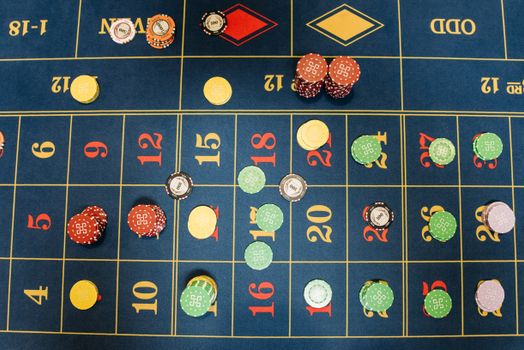
Gambling has long been more than just a pastime—it has been a powerful social force, intricately woven into the fabric of societies throughout history. Its impact reaches beyond entertainment, influencing economic mobility, reinforcing or challenging class divisions, and shaping the destinies of entire communities. Understanding the impact of gambling on historic class structures reveals both the mechanisms that sustained social hierarchies and the unexpected ways gambling provided opportunities for transformation.
Gambling and the Reinforcement of Social Hierarchies
Throughout history, gambling has often mirrored and perpetuated existing class divisions. In ancient Rome, for example, while games of chance were popular among all social ranks, the laws governing gambling were different for patricians (the elite) and plebeians (commoners). The Lex Alearia of 204 BCE restricted gambling, but enforcement was lenient for the elite, who could afford to pay fines, while commoners faced severe penalties.
In 18th-century England, gambling was a hallmark of the aristocracy. Members of the upper class frequented exclusive gaming clubs like White’s, where wagers often exceeded the annual income of a working-class family. These gambling environments were not just about risk and reward—they were about demonstrating social status and wealth. For example, records from White’s Club in the 1790s show that single bets could reach up to £3,000 (over £400,000 today when adjusted for inflation).
.png)
Meanwhile, lower classes participated in street dice games, cockfights, and lotteries, which were viewed by authorities as vices linked to poverty and crime. Efforts to suppress working-class gambling while tolerating elite wagers further reinforced societal boundaries.
Gambling as a Vehicle for Social Mobility
Despite its role in entrenching class lines, gambling occasionally offered a rare ladder for social ascent. Lotteries, in particular, were sometimes promoted as tools for upward mobility. The earliest state-sponsored lotteries in 16th-century Italy and England were designed to fund public works but also attracted lower and middle-class participants with dreams of sudden wealth.
By the early 20th century, the rise of organized lotteries and sweepstakes allowed individuals from humble backgrounds to envision a dramatic change in fortune. One famous example comes from France: in 1932, a Parisian factory worker named Jacques Coeur won a national lottery jackpot equivalent to 330,000 francs (around $1.2 million today). Such stories, though rare, fueled the belief in gambling as a ticket out of poverty.
However, sociological studies reveal that upward mobility through gambling was more myth than reality. According to a 2017 survey by the UK Gambling Commission, only 3% of regular lottery players reported any significant improvement in their financial situation due to gambling. Nonetheless, the hope it inspired helped shape working-class attitudes toward risk and aspiration.
The Economic Impact of Gambling on Different Social Classes
Gambling’s economic effects have varied sharply by class. For the wealthy, gambling losses were often inconsequential and even seen as the price of entertainment or socializing. For the poor, however, the consequences could be devastating.
A comparative overview of gambling’s economic impact on historic class structures is illustrated in the following table:
| Class | Typical Gambling Venues | Common Stakes | Social Consequences | Economic Impact |
|---|---|---|---|---|
| Aristocracy | Private clubs, salons | High (e.g., £1,000+ per bet) | Status display, social networking | Minimal impact; losses absorbed by wealth |
| Middle Class | Public lotteries, betting shops | Moderate (e.g., £1-£100 per wager) | Occasional upward mobility, financial risk | Potential for loss or rare windfall |
| Working Class | Street games, lotteries, taverns | Low (e.g., pennies to a few pounds) | Social bonding, escapism | Losses could threaten basic livelihood |
Data from 19th-century England shows that, in industrial cities like Manchester, working-class families spent up to 5% of their weekly income on gambling. In contrast, the landed gentry’s gambling expenditures rarely exceeded 1% of their wealth, even in extreme cases. This disparity underscores how gambling losses were far more damaging for those at the bottom.
Gambling, Legislation, and Class Control
Governments have long used gambling laws to control and police class behavior. In Victorian Britain, the Betting Act of 1853 banned betting houses, targeting working-class gambling while leaving private clubs untouched. This legislation reflected elite anxieties about the “moral decline” of the lower classes, even as aristocrats continued to wager vast sums behind closed doors.
Similarly, in Qing Dynasty China (1644–1912), gambling was officially outlawed. Yet, the wealthy continued to host secret games in opulent homes, while commoners faced harsh punishments for even minor infractions. This selective enforcement maintained class distinctions and underscored the role of law as a tool for social control.
In the United States, anti-gambling crusades of the late 19th and early 20th centuries targeted urban immigrant communities, where gambling was both a social activity and a means of supplementing meager incomes. Reformers, often from upper-class backgrounds, framed their efforts as moral crusades, but the underlying effect was often to criminalize working-class leisure.
Gambling and Class Identity: Cultural Symbols and Stereotypes
Gambling has not only been a source of division and aspiration but also a key element in the cultural identities of various classes. For the aristocracy, games like baccarat or horse racing were integral to the rituals of high society. King Edward VII of England was renowned for his gambling exploits, and his participation lent prestige to events like Royal Ascot.
By contrast, the working class developed its own gambling traditions and folklore. Irish immigrants in 19th-century New York popularized games like "policy," an early lottery, which became a symbol of community resilience and hope. In the American South, the tradition of "shooting craps" on street corners became both a pastime and a means of solidarity among African American workers facing discrimination and poverty.
Stereotypes about gambling also reinforced class distinctions. Aristocrats who gambled were seen as refined risk-takers, while working-class gamblers were often depicted as reckless or immoral. These stereotypes persisted in literature and media, from the "gentleman gambler" of Victorian novels to the hard-luck characters in early 20th-century films.
The Legacy of Gambling on Modern Social Stratification
The historical dynamics of gambling and class continue to echo in contemporary society. While online and state-run lotteries have democratized access to gambling, research shows that the poorest segments of society are still the most frequent gamblers—and the most vulnerable to harm. According to a 2022 study by the National Council on Problem Gambling, households earning less than $25,000 annually are twice as likely to spend over 5% of their income on gambling compared to households earning over $75,000.
Meanwhile, high-stakes gambling remains a marker of elite status, from exclusive casino salons in Monaco to private poker games among tech billionaires. The paradox persists: gambling can both reinforce and blur class lines, offering hope to some and hardship to others.
Final Reflections: Gambling’s Enduring Influence on Class Structures
From ancient Rome to the modern-day lottery, gambling has both mirrored and shaped the class structures of its time. It has reinforced social hierarchies through exclusive venues and unequal enforcement of laws, yet also dangled the possibility of dramatic social mobility. Economic consequences have always fallen hardest on those least able to bear them, while cultural attitudes toward gambling have both reflected and perpetuated class identities.
Understanding gambling’s historic influence on class structures helps explain current debates about gambling regulation, addiction, and social equity. As societies continue to grapple with these issues, the lessons of history remain as relevant as ever.